• Welcome to your new Gnomio site

    Now, you are in control!

    Moodle is an open-source Learning Management System (LMS) that provides educators with the tools and features to create and manage online courses. It allows educators to organize course materials, create quizzes and assignments, host discussion forums, and track student progress. Moodle is highly flexible and can be customized to meet the specific needs of different institutions and learning environments.

    Moodle supports both synchronous and asynchronous learning environments, enabling educators to host live webinars, video conferences, and chat sessions, as well as providing a variety of tools that support self-paced learning, including videos, interactive quizzes, and discussion forums. The platform also integrates with other tools and systems, such as Google Apps and plagiarism detection software, to provide a seamless learning experience.

    Moodle is widely used in educational institutions, including universities, K-12 schools, and corporate training programs. It is well-suited to online and blended learning environments and distance education programs. Additionally, Moodle's accessibility features make it a popular choice for learners with disabilities, ensuring that courses are inclusive and accessible to all learners.

    The Moodle community is an active group of users, developers, and educators who contribute to the platform's development and improvement. The community provides support, resources, and documentation for users, as well as a forum for sharing ideas and best practices. Moodle releases regular updates and improvements, ensuring that the platform remains up-to-date with the latest technologies and best practices.

    Links of interest:

    (You can edit or remove this text)

Available courses

Solar Installation

Solar installation refers to the process of designing, mounting, and commissioning solar energy systems that convert sunlight into usable electrical power. It plays a vital role in the adoption of renewable energy technologies aimed at reducing dependence on fossil fuels, lowering electricity costs, and minimizing environmental impact. Solar installations are commonly used in residential, commercial, and industrial settings, as well as in remote and off-grid areas where access to the national power grid is limited or unavailable.

The solar installation process begins with site assessment and system design. During this stage, the installer evaluates the location to determine its suitability for solar energy generation. Factors such as roof orientation, tilt angle, available space, shading from nearby buildings or trees, and local climate conditions are carefully considered. The electrical load requirements of the user are calculated to determine the size and type of the solar system needed. Based on this assessment, a system design is developed, including the number of solar panels, inverter capacity, battery storage (if required), and wiring layout.

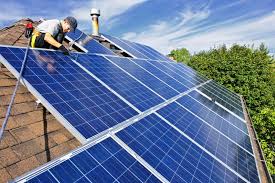
Solar panels, also known as photovoltaic (PV) modules, are the primary components of a solar installation. They are mounted on rooftops or ground-mounted structures using strong and durable mounting frames that can withstand environmental conditions such as wind and rain. The panels are positioned to receive maximum sunlight throughout the day, typically facing the equator. Proper spacing and secure mounting are essential to ensure efficient energy generation and long-term reliability of the system.

Inverters and other balance-of-system components are equally important in a solar installation. The inverter converts the direct current (DC) electricity produced by the solar panels into alternating current (AC), which is suitable for use in homes and businesses. Charge controllers are used in systems with batteries to regulate the charging process and prevent overcharging or deep discharge. Batteries store excess energy generated during the day for use at night or during power outages, improving energy independence and system reliability.

Electrical wiring and protection are critical aspects of solar installation. DC and AC cables must be correctly sized and properly insulated to handle the system’s voltage and current levels. Protective devices such as fuses, circuit breakers, isolators, and surge protection devices are installed to safeguard the system from electrical faults, lightning, and power surges. Proper earthing and bonding are also essential to protect both users and equipment from electric shock and damage.

Testing, commissioning, and maintenance ensure the safe and efficient operation of a solar installation. After installation, the system is tested to confirm correct wiring, proper voltage levels, and efficient power output. Commissioning involves setting up the inverter, monitoring systems, and user training. Regular maintenance, such as cleaning panels, checking connections, and inspecting batteries, helps maintain system performance and extend its lifespan.

In conclusion, solar installation is a structured and technical process that integrates electrical knowledge with renewable energy principles. A properly designed and installed solar system provides clean, reliable, and sustainable power while contributing to environmental conservation and long-term energy savings.

Electrical Installation

Electrical installation refers to the process of designing, assembling, and maintaining electrical systems within buildings and other structures to ensure the safe and efficient supply of electrical power. It is a critical field in electrical engineering and construction, covering all components used in the distribution and utilization of electricity, such as wiring systems, switches, sockets, protective devices, lighting fixtures, and electrical appliances. Proper electrical installation is essential for safety, functionality, energy efficiency, and compliance with established standards and regulations.

The electrical installation process begins with planning and design. At this stage, the electrical requirements of a building are assessed based on its intended use, size, and occupancy. Load estimation is carried out to determine the expected electrical demand, which guides the selection of appropriate cable sizes, protective devices, and distribution methods. Electrical drawings such as schematic and wiring diagrams are prepared to show the layout of circuits, accessories, and equipment. This planning phase ensures that the installation will meet current and future needs while adhering to safety regulations and codes of practice.

Wiring systems form the backbone of any electrical installation. They provide the paths through which electrical energy flows from the source of supply to various points of use. Common wiring methods include conduit wiring, trunking, casing and capping, and surface or concealed wiring. The choice of wiring system depends on factors such as the environment, type of building, cost, durability, and ease of maintenance. Cables must be correctly sized to carry the expected current without overheating, and insulation must be suitable for the operating conditions to prevent electric shock and fire hazards.

Electrical accessories and fittings are also key components of an installation. These include switches, socket outlets, lamp holders, ceiling roses, and distribution boards. Switches control the flow of electricity to lighting points and appliances, while socket outlets provide convenient connection points for portable equipment. Distribution boards house protective devices such as fuses, circuit breakers, and residual current devices (RCDs), which protect circuits from overloads, short circuits, and earth leakage faults. Proper installation and labeling of these accessories enhance safety and ease of operation.

Protection and earthing are fundamental aspects of electrical installation. Protective devices are designed to disconnect the supply automatically in the event of a fault, reducing the risk of injury and damage to equipment. Earthing provides a low-resistance path for fault current to flow safely to the ground, preventing exposed metal parts from becoming dangerously live. Bonding of metallic parts further ensures that all conductive components remain at the same electrical potential, minimizing the risk of electric shock.

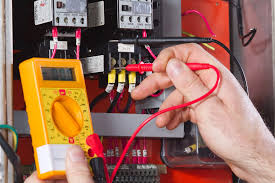
Testing and inspection are carried out after installation to verify that the system is safe and compliant with regulations. Tests such as continuity, insulation resistance, polarity, and earth fault loop impedance are performed to confirm that circuits are correctly installed and functioning as intended. Regular inspection and maintenance are also necessary to identify wear, damage, or deterioration over time, ensuring the continued safety and reliability of the installation.

In conclusion, electrical installation is a comprehensive discipline that combines technical knowledge, practical skills, and strict adherence to safety standards. A well-executed electrical installation ensures the reliable supply of electricity, protects users from electrical hazards, and supports the efficient operation of electrical equipment in residential, commercial, and industrial environments.